Many eco-friendly gardeners think that turf grass is a bad thing. The truth, of course, isn’t that the GRASS is bad. What can be bad, and detrimental to the environment, are the actions that people take to keep their turf grass green, manicured and healthy looking.
People often over-water their lawns and apply dangerous chemicals to help keep the grass green. They can also pollute the environment by over mowing and trimming.
So I think it is great that the National Arboretum is planning an exhibit to teach people about the benefits of turf grass, along with proper maintenance techniques.
The theme of the exhibit is: New developments in turfgrass-making and environmental choice for our homes and communities and will be arranged in three sub-themes:
Turf and the Environment - Proper maintenance practices, pest/weed control, seasonal issues, water quality, erosion control benefits, research
Turf in the Landscape - Why turf? Grass species, soils, landscape &turf cooling/other benefits, ecosystem services, home values
Turf in the Community - Urbanization, recreation needs, functionality, safety/human health/obesity issues, value of turf industry/jobs
The National Arboretum is currently raising money for the conceptual design phase. The goal is to install the exhibit for an opening by spring 2013. Plans are to continue the exhibit through 2016 or 2017.
For more information, here is a pdf file of the proposal.

Tuesday, March 20, 2012

Spring has Sprung! Along with the Native Plant Sales
The calendar has finally caught up with the weather and Spring has now OFFICIALLY sprung. If you are like me and always try to keep a personal calendar listing gardening events that will help you spruce up your green garden, here is a list of upcoming native plant sales planned for the area.
- April 2 & 9 - Green Spring Garden Markets - http://www.fairfaxcounty.gov/parks/gsgp/events.htm
- April 9 & May 7 - Beltsville Garden Club Spring Sales - Beltsville, MD -http://www.beltsvillegardenclub.org/SpringSales2011.html
- April 14 - 16, AHS River Farm Annual Spring Garden Market - Great Falls, VA - http://www.ahs.org/river_farm/events.htm
- April 15 & 16 - Fairfax County 2011 Native Seedling Sale - http://www.fairfaxcounty.gov/nvswcd/orderform_2011.pdf
- April 16 - Long Branch Nature Center Plant Sale - Arlington,
VA - http://www.arlingtonva.us/calendar/#EventDetails_12663 - April 16 - Chesapeake Natives Native Plant Sale - Takoma
Park, MD - http://www.chesapeakenatives.org/ - April 16 & 17 - Adkins Arboretum Native Plant Sale -
Ridgely, MD - http://www.adkinsarboretum.org/native_plant_resources/plant_sale.html - April 17 - Herring Run Spring Native Plant Sale - Baltimore, MD -http://bluewaterbaltimore.org/herring-run-nursery/native-plants
- April 21. 1:00-3:00 PM. (Rain Date: Sunday, April 22) Long Branch Nature Center Native Plant Sale. 625 S. Carlin Springs Rd. Arlington, VA 22204 http://www.arlingtonva.us/calendar/
- April 28. 9 – 2 PM. Parkfairfax Native Plant Sale. Saturday, 3601 Valley Drive, Alexandria, VA - http://home.earthlink.net/~sknudsen/
- April 29 & 30 - Black Hill Native Plant Sale - Boyds, MD - http://www.montgomeryparks.org/nature_centers/blackhill/spring_programs.shtm#march
- May 6th, 10 – 3. Glencarlyn Library Plant and Herb Sale. - 300 S. Kensington St. Arlington, VA 22204 http://mgnv.org/events/may/
- May 6. 10:00 AM to 2:00 PM. Earth Sangha Native Ecotype Plant Sale. Earth Sangha Wild Plant Nursery. Franconia Park, Springfield, VA View the nursery’s location on Google Maps. http://www.earthsangha.org/wpn/wpn.html
- May 6 & 7 - Flower Mart at the National Cathedral - http://www.allhallowsguild.org/fm/come.html
- May 7 - Assateague Coastal Trust Native Plant Sale - Berlin,
MD http://www.actforbays.org/ - May 7 - Prince William Wildflower Society Native Plant Sale -
Manassas, VA http://vnps.org/pwws/ - May 12th. Green Spring Gardens Plant Sale. 4603 Green Spring Road, Alexandria, VA - http://mgnv.org/events/may/
- May 14 - Green Spring Garden Park Plant Sale - Annandale,
VA http://www.fairfaxcounty.gov/parks/gsgp/events.htm/ - May 14 - Blue Ridge Wildflower Society Plant Sale - Roanoke VA - http://brwfs.org/calendar.htm
- May 19 & 20 - Hyattsville Elementary PTA's 2nd Annual Native Plant Sale - Hyattsville, MD - http://www.nativeplantsale.org/
- May 14 - Roland Park Elementary/Middle School Native Plant Sale Baltimore, MD. - http://%20www.rolandparknative.org/
- May 18 & 19 - Environmental Concern Spring Native Plant Sale -
EC Open House on Saturday Environmental Concern - St. Michaels, MD Information - June 25 - Nanticoke River Jamboree Handsell - Vienna, MD - http://nanticokeriverjamboree.com/
- August 27 - Irvine Native Plant Seminar & Sale Irvine Nature Center - Owings Mills, MD - http://www.irvinenaturecenter.net/images/native_plants.pdf
- September 7 & 8 - Environmental Concern Fall Native Plant Sale - Environmental Concern - St. Michaels, MD - http://www.wetland.org/nursery_retail.htm
- September 17 & 18 - Adkins Arboretum Native Plant Sale - Ridgely, MD - http://www.adkinsarboretum.org/native_plant_resources/plant_sale.html
Monday, March 19, 2012
The proof is in the planting
 We just got the April/May issue of National Wildlife Magazine in the mail and I was excited to see that this issue is dedicated to Gardening for Wildlife.
If you have followed this blog for long, you probably know that my strong interest in eco-friendly gardening started because of my desire to attract more birds, butterflies and other creatures to my yard and gardens. AND my efforts to garden for wildlife became more focused after I learned about the National Wildlife Federation (NWF) Certified Wildlife Habitat (CWH) program. I really wanted to get my yard certified.
My favorite article in the issue is called Certified Success, and it is about a woman named Stephanie Widows who did a study, as part of her master’s program, to determine how successful the NWF Certified Wildlife Habitat program is in providing habitat.
For the study, Widows visited 50 homes that have certified habitats and evaluated them to see the quantity and quality of wildlife habitat that each yard had. She compared both the habitat elements and the number of wildlife species on these properties to nearby properties and to other, randomly selected properties in the same neighborhoods.
Her study concluded that the certified properties did, indeed, provide more beneficial habitat AND had more wildlife species than the neighboring yards which were used for comparison. In fact, the certified yards had more than TWICE as many species present as the other yards which were visited.
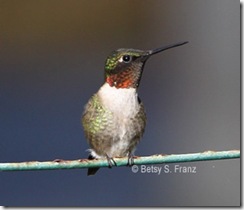
Most people who garden for wildlife can attest to the fact that their eco-friendly gardening definitely does bring in the wildlife. I am sitting outside while I am writing this and can see several species of birds and butterflies and even hear a hummingbird up chittering away in the trees. I know that most of that wildlife is here only because I have made a concerted effort to attract it.
I also know that there haven’t been many official studies done to PROVE that gardening for wildlife makes a difference. I’ve looked for research on the topic before and know it was very limited. So I was excited to read about Ms. Widows ' research.
Of course, you don’t have to have your yard certified in the NWF CWH program to attract wildlife. Certainly, anyone can create an eco-friendly landscape with wildlife in mind and provide the same benefits. But with almost 150,000 homes enrolled in the program (adding up to some 300,000 acres of habitat) the program did provide a great basis for Ms. Widows' study.
To qualify for certification in the NWF CWH program, a property must provide wildlife with food, water, shelter and places to raise their young. Other sustainable gardening practices which allow a property to earn certification are:
- the use of rain barrels
- water-wise landscaping
- mulch
- rain gardens
- integrated pest management
- removal of non-native plants
- use of native plants
- reduced lawn areas
- elimination of chemicals
- composting
10 Tips for Creating a Wildlife Friendly Garden
How I Became a Bird Nerd
Sunday, March 18, 2012
Rain barrel workshops for Leesburg Residents
The Loudoun Soil and Water Conservation District, in partnership with the Leesburg Environmental Advisory Commission, will offer four rain barrel workshops for Leesburg residents during April and May.
Rain barrels are an economical and practical way for homeowners to conserve water and save money. In addition, they reduce runoff, as stormwater is collected before it picks up sediment and contaminants that pollute area streams and rivers, which drain to the Potomac River and eventually to the Chesapeake Bay.
The rain barrel workshops will be held at Tuscarora Creek Park, located at 425 Solitude Court SE, on Wednesday, April 25; Thursday, April 26; Tuesday, May 15; and Wednesday, May 16. All workshops begin at 6:30 p.m.
Residents can make a rain barrel to take home or purchase a pre-made barrel. Each workshop will last approximately one hour; participants need to attend only one workshop. The rain barrel kits to make on site are $50 each; the pre-made barrels are $65 each, plus tax. The EAC is offering a $20 discount on the purchase of a rain barrel to each Leesburg household as an incentive to promote water conservation. Discounts are limited to two per household.
Participants are reminded to dress appropriately if they will be constructing their own barrels. A registration form can be downloaded from the Loudoun Soil and Water Conservation District website at www.loudounsoilandwater.org. For more information, call Suzanne Brown, education outreach specialist for the Loudoun Soil and Water Conservation District, at 571-918-4530, ext. 105.
Saturday, March 17, 2012
Continuing More than 50 years of Beautiful Garden Memories
Volunteer Opportunity with the Washington Suburban Sanitary Commission
Sunday, March 25 from 9 a.m. to Noon-“Continuing More than 50 Years of Beautiful Garden Memories”
WSSC planted an azalea garden over 50 years. This fall, we added over 150 plants. But weeds have also found the azalea garden-and we need your help to remove them. Brighton Dam’s Azalea Garden, 2 Brighton Dam Road, Brookeville.
For more information, visit the WSSC website.
Planting Trees and Helping Wildlife
Volunteer Opportunity with the Washington Suburban Sanitary Commission
Saturday, March 24 from 9 a.m. to Noon-“Planting Trees and Helping Wildlife”-
We need Girl Scouts from southern Prince George’s County to help us plant hazelnut, black cherry and persimmon trees to provide food and cover for birds and butterflies.
Piscataway Wastewater Treatment Plant, 11 Farmington Rd W, # W, Accokeek, MD 20607.
For more information, visit the WSSC website.
Vegetable Gardening 101
Saturday, March 24, 9 AM – Noon
An in depth look at starting a garden that includes instruction on seed starting, soil preparation, and tips on where and when to plant.
Fairlington Community Center, 3308 S. Stafford St. To register, call 703-228-6414.
Plans for the weekend – lessen the lawn
It looks like we are going to have beautiful weather for getting outside and working in the yard today. And one of the main things on my garden to-do list is to remove some more lawn to make another garden area.
It’s a little bit of hard labor, but it’s still cool enough outside to make the work bearable. And the environmental benefits (plus having more garden area in the part of our yard that gets the most sun) will be well worth it.
Here are some of the eco-friendly benefits of reduced lawn area:
It’s a little bit of hard labor, but it’s still cool enough outside to make the work bearable. And the environmental benefits (plus having more garden area in the part of our yard that gets the most sun) will be well worth it.
Here are some of the eco-friendly benefits of reduced lawn area:
- Reduced water consumption – turf generally requires more water than plants which are properly chosen for your site’s conditions.
- Reduced storm water runoff - shrubs, trees, and other leafy plants help absorb, intercept, and slow down rainfall, thereby reducing storm water runoff.
- Reduced labor – less time spent on lawn maintenance.
- Reduced need for chemicals – more homeowners use chemicals greening and feeding their lawns than on properly selected plant species.
- Reduced air and noise pollution caused by gas mowers, edgers, blowers, etc.
- Enhanced biodiversity – replacing lawns with shrubs and flowers provide shelter and food sources for birds, butterflies and other local wildlife.
Friday, March 16, 2012
Benefits of Drip Irrigation – March 21st
Are you tired of dragging water hoses across your lawn or fighting with soaker hoses?
The Wednesday, March 21 meeting of the Chevy Chase Citizens Association Garden Club features Murray Schmechel, a volunteer at the Common Good Garden located downtown in DC.
Murray will briefly talk about the Common Good Garden and then focus on the benefits of a drip irrigation system which targets water to specific plants and areas in a garden reducing overall water consumption.
He will navigate you through installation bringing samples of the hardware needed to put together a simple drip irrigation system.
The meeting is opened to everyone and starts at 7:15 pm in the Chevy Chase Community Center, McKinley St and Connecticut Ave., NW.
For questions or more details, email Barbara Baldwin, bbaldwing@yahoo.com
Wednesday, March 14, 2012
Tree Rebates available to green residential, commercial property in D.C.
Spring is an ideal time to plant trees and Casey Trees offers rebates up to $100 per tree to individuals who plant trees on private property — residential or commercial — in the District.
Small and medium canopy trees — including standard-size fruit and trees — are eligible for rebates up to $50 per tree, as long as the tree reaches 15 feet tall and wide at maturity. Seven genera and 27 species noted for their large canopy and environmental benefits qualify for rebates up to $100 per tree. There is no limit to the number of rebates per property.
Invasive tree species and any species of ash, dwarf trees and shrubs do not qualify for a rebate of any amount.
To help customers identify rebate-eligible tree stock, many D.C.-area nurseries and home improvement centers are promoting the program in their stores with promotional signage and special tree tags. However, trees may be purchased from any store and through landscaping and landscape architecture companies.
The Tree Rebate program is funded by the District Department of the Environment.
Downloadable rebate forms, submission instructions and a complete list of trees eligible for the increased rebate are available at www.caseytrees.org/rebate.
Small and medium canopy trees — including standard-size fruit and trees — are eligible for rebates up to $50 per tree, as long as the tree reaches 15 feet tall and wide at maturity. Seven genera and 27 species noted for their large canopy and environmental benefits qualify for rebates up to $100 per tree. There is no limit to the number of rebates per property.
Invasive tree species and any species of ash, dwarf trees and shrubs do not qualify for a rebate of any amount.
To help customers identify rebate-eligible tree stock, many D.C.-area nurseries and home improvement centers are promoting the program in their stores with promotional signage and special tree tags. However, trees may be purchased from any store and through landscaping and landscape architecture companies.
The Tree Rebate program is funded by the District Department of the Environment.
Downloadable rebate forms, submission instructions and a complete list of trees eligible for the increased rebate are available at www.caseytrees.org/rebate.
Subscribe to:
Posts (Atom)